Reviewing 3D Crochet Floral Embroidery Patterns
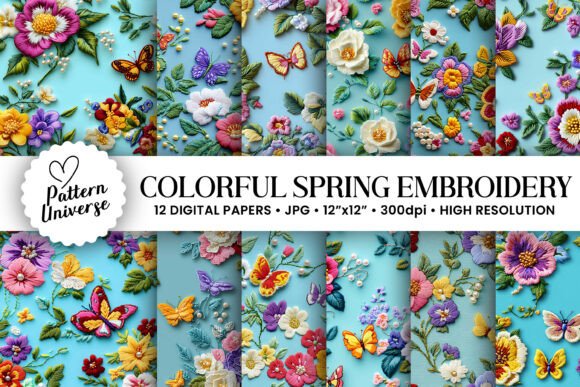
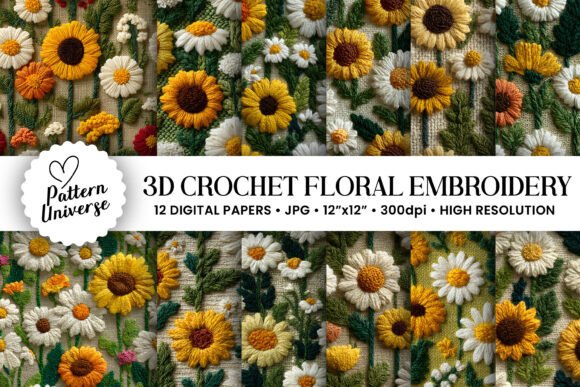
As an embroidery designer who spends most of my days troubleshooting tension issues and selecting the perfect thread colors, I am always on the lookout for design assets that bring a unique texture to my work. Recently, I came across 3D Crochet Floral Embroidery Patterns on Creative Fabrica. The description highlights "12 3D Crochet Sunflowers Daisy Embroidery Seamless Patterns Ai Generated Perfect for Gift wrapping, Greeting Cards, Invitations, Tumbler Wraps, Junk Journal Backgrounds, Wall Art, Scrapbook and many o". While the title suggests these are primarily graphic assets, as someone who bridges the gap between digital design and physical stitching, I wanted to evaluate how this machine embroidery design concept translates to real-world handmade products.
First Impressions: Visual Mood and Detail Level
The moment you download this embroidery file, the first thing that strikes you is the visual mood. The "3D Crochet" aesthetic implies depth, warmth, and a tactile quality that flat satin stitches often lack. For designers looking to add a cozy, artisanal feel to their custom apparel or tote bag design projects, this pattern offers a distinct personality. It mimics the look of hand-crocheted yarn, which creates an immediate emotional connection with the viewer.
The detail level in these design assets is quite high. Because they are AI-generated, there is a certain organic irregularity to the loops and petals that feels authentic rather than rigid. This is crucial for handmade product branding, where buyers are seeking items that feel personal and crafted. The seamless nature of the patterns means they can be repeated easily, making them ideal for larger surfaces like sweatshirt embroidery or full-body tote bags.
Real-World Application in Embroidery Projects
I tested the concept of using these patterns for various commercial embroidery scenarios. Here is how they might perform in specific product categories:
- Apparel Decorators: For sweatshirt embroidery, the textured look of the crochet flower adds dimension without requiring excessive thread density. It breaks up the monotony of standard floral designs.
- Etsy Sellers: If you are selling personalized gift items, such as baby blankets or nursery decor, these sunflower and daisy motifs are timeless. They fit perfectly into bohemian or rustic themes that are currently trending.
- Craft Fair Products: When creating embroidered patch collections, the scalloped edges of the crochet flowers allow for clean applique boundaries, reducing the need for complex trimming.
- Boutique Merchandise: For kitchen towels or aprons, a single large motif or a repeating border can elevate a simple cotton item into a premium-priced good.
However, it is important to remember that these are originally described as graphics for digital use (gift wrapping, junk journals). Therefore, when adapting them for commercial embroidery, you must view them as a source of inspiration for digitizing your own files or using them as underlay guides, depending on the specific file format provided by Creative Fabrica.
Practical Considerations for Stitching
Translating a "3D Crochet" visual into stitch code requires careful planning. Here are the practical notes every designer should consider before sending this to the hoop.
Hoop Size and Density
One of the biggest challenges with intricate floral patterns is the hoop size. If the pattern is designed as a seamless repeat, ensure that the individual elements are not too small to stitch effectively. Tiny lettering or minute details within the crochet loops may get lost if the stitch density is not optimized. Always test on scrap fabric to see if the needle can penetrate the stabilizer cleanly without breaking.
Fabric Compatibility
This design shines on stable fabrics like denim, canvas, or heavy cotton. However, caution is needed when working with stretchy fabrics. The "crochet" look relies on defined loops; if the fabric stretches during stitching, the symmetry will distort. Use a proper stabilizer—preferably a cut-away for stretchy materials—to maintain the integrity of the design. Similarly, dark fabric can hide the subtle shading variations in the AI-generated design, so choose your thread colors wisely to ensure contrast.
Stitch Types
To achieve the 3D effect, you might need to combine different stitch types. A base of fill stitch can provide the background, while satin stitch outlines define the petals. In some areas, a running stitch might simulate the loose ends of yarn. Review the digitization closely to ensure these transitions are smooth and do not cause puckering.
Impact on Product Value and Branding
Using unique, textured designs like 3D Crochet Floral Embroidery Patterns can significantly boost your product photography results. The perceived value of an item increases when the embroidery has visible depth and complexity. Buyers associate this level of detail with higher quality and care.
For brand consistency, having a signature style—such as a recurring crochet-floral motif—helps customers recognize your work instantly. Whether you are selling digital embroidery file bundles or finished goods, this cohesive look builds trust. Furthermore, because the design evokes a handmade, crafty vibe, it enhances the giftability of your products. Customers are more likely to purchase a embroidered pillow cover or a custom tote bag if it looks like it was made with love and attention to detail.
Final Verdict and Licensing Check
Is 3D Crochet Floral Embroidery Patterns worth downloading? Absolutely, but with a caveat. As a graphic asset, it is perfect for printable mockup creation, allowing you to visualize how your final product will look before you even thread the machine. It serves as excellent reference material for digitizers aiming to create realistic textile textures.
Before using these for any finished product sales, please confirm the licensing terms on the Creative Fabrica product page. Ensure you have the right to use the design for commercial purposes. Also, inspect the file details carefully. If the file is a vector or raster image, you will need to digitize it yourself. If it is already an embroidery file, check the compatibility with your software.
In summary, this product offers a beautiful, trendy aesthetic that can elevate your custom apparel and home decor lines. By paying attention to stitch density, fabric choice, and proper stabilization, you can turn these digital concepts into stunning physical realities that your customers will adore.