Red Blue Motif Embroidery Pattern Review
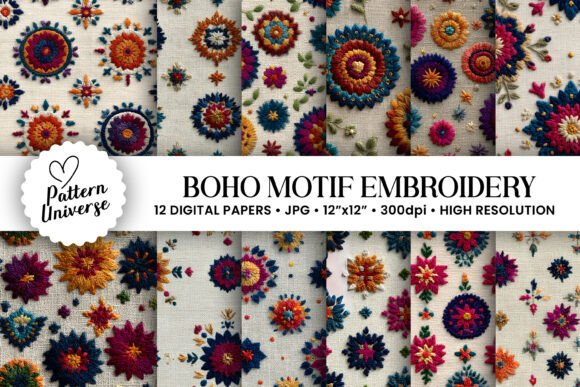
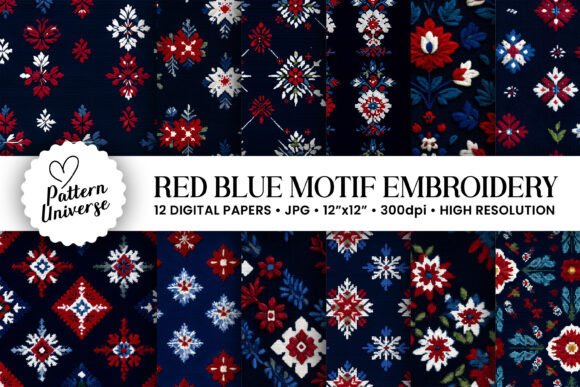
Walking into a craft fair with a booth full of handmade goods is an exercise in strategy. You have seconds to catch a passerby’s eye, and your products need to tell a story before they even touch the fabric. As an experienced embroidery designer who has spent countless weekends packing tote bags and setting up tables, I know that the difference between a sale and a browse often comes down to visual impact and perceived value. Recently, I evaluated the Red Blue Motif Embroidery Pattern, a set of 12 Red Blue Motif Embroidery Seamless Patterns Ai Generated Perfect for Gift wrapping, Greeting Cards, Invitations, Tumbler Wraps, Junk Journal Backgrounds, Wall Art, Scrapbook and many other craft pr. This review breaks down how this specific design asset performs when translated from a digital graphic into tangible, sellable craft fair product items.
First Impressions: Boldness Meets Versatility
The title alone suggests a strong color palette. Red and blue are complementary colors that naturally draw the human eye. In the context of a busy market, where dozens of vendors are vying for attention, a motif that utilizes these high-contrast hues has an immediate advantage. The description highlights that these are seamless patterns generated by AI, which implies a level of geometric precision or repetitive flow that works exceptionally well for background elements or all-over prints.
When I first looked at the preview assets, the design felt both modern and slightly rustic. It isn’t overly ornate, which is good; cluttered designs often lose their charm when embroidered because the stitches can merge together. Instead, this motif strikes a balance between decorative and clean. For an Etsy seller or a boutique maker, this versatility is key. It doesn’t scream "seasonal" like a Christmas tree or a pumpkin might, meaning you can rotate these items on your shelf year-round without looking outdated.
Product Application: Where Does It Shine?
Not every embroidery file translates equally well to every product. Based on the nature of seamless motifs, here is how I see the Red Blue Motif Embroidery Pattern performing across different categories:
- Tote Bag Design Opportunities: A canvas tote bag is the quintessential handmade product for markets. Because the pattern is seamless, it can be scaled to fill the entire front panel of a bag. When paired with sturdy canvas, the red and blue tones pop beautifully. However, ensure the design isn’t so dense that the bag becomes stiff and unwearable.
- Apron Embroidery and Tea Towel Embroidery: These are high-volume sellers. If the motif allows for a border application, it would look stunning framing the hem of a kitchen apron. For tea towels, the pattern could serve as a central focal point or a repeating edge detail. The contrast of red and blue against white or cream linen is visually appetizing and fits the farmhouse aesthetic many buyers seek.
- Embroidered Patch and Cap Accents: If the motif contains distinct shapes within the seamless repeat, isolating one unit can create a striking embroidered patch for denim jackets or baseball caps. Just be mindful of the scale; small details may get lost on a curved cap surface.
- Fabric Pouches and Pillow Covers: For smaller small shop product items like zippered pouches, a smaller iteration of the motif works best. On pillow covers, the pattern adds texture and depth, elevating a plain throw pillow into a statement piece.
Production Practicality and Sales Logic
From a production standpoint, efficiency is money. The fact that this is a seamless pattern means you aren’t limited to placing one single image per item. You can program your machine to stitch the pattern repeatedly, creating an all-over effect that feels premium and substantial. This repeatability is crucial for batch production. If you are preparing for a weekend fair, being able to quickly hoop and stitch multiple identical items increases your output.
Furthermore, the design assets are described as suitable for digital uses like junk journals and wall art. This dual utility is a massive advantage. You can create printable mockups for your online listings using the same files, ensuring brand consistency between your physical inventory and your digital presence. Buyers love seeing the product in lifestyle contexts, and having the source file allows you to generate those images easily.
Critical Considerations for Embroidery Success
While the concept is strong, execution is everything. Here are the practical notes every designer must consider before committing to production:
- Stitch Density and Clarity: AI-generated patterns can sometimes include tiny lines or intricate details that look good on screen but fail under a needle. Before running a full batch, test the stitch density on scrap fabric. If the details are too fine, they may pucker or disappear, especially on textured fabrics like heavy cotton twill or terry cloth.
- Thread Contrast: The success of red and blue relies heavily on the base fabric. On dark fabric, these colors might blend together or lose definition unless you use high-saturation threads or add a stabilizer layer. On light fabrics, ensure the blues aren’t too pale to stand out against the reds. Always check thread contrast against your chosen material.
- Hoop Size and Placement: Confirm the hoop size required for your intended product. If the seamless pattern requires a large area, you may need to re-hoop frequently, which slows down production. Ensure your digitizing software handles the seamlessness correctly to avoid visible jumps or misalignments.
- Stabilizer Selection: The choice of stabilizer can make or break the final look. For stretchy fabrics like jersey used in some caps or casual totes, a cut-away stabilizer is essential to prevent distortion. For woven cottons, a tear-away might suffice, but always test first.
Final Verdict for Market Sellers
The Red Blue Motif Embroidery Pattern offers a compelling mix of bold aesthetics and functional versatility. It is not just a pretty picture; it is a tool for building a cohesive collection. Whether you are selling commercial embroidery pieces to local boutiques or offering custom services at a farmers market, this design provides a solid foundation.
For the digital embroidery file user, the inclusion of various applications—from greeting cards to tumbler wraps—suggests a high-resolution vector or raster source that retains quality at different scales. This is rare and valuable. It allows you to experiment with sizing, making the design work for a tiny pin-back button or a large wall hanging.
As a Freebies category item labeled under Graphics, it represents an excellent entry point for testing new styles without significant financial risk. However, remember to verify commercial licensing terms before selling finished goods. If the license permits, this pattern has the potential to become a staple in your inventory, driving sales through its timeless color scheme and adaptable format. Start with a few key items—a tote bag and a tea towel—to gauge customer reaction, then expand your range based on what sells best at your next event.